
Overview
Electronic signatures (eSignatures) and digital signatures are often used interchangeably but serve different purposes and are based on distinct technologies. This page outlines the key differences to help teams understand when and how to use each appropriately.
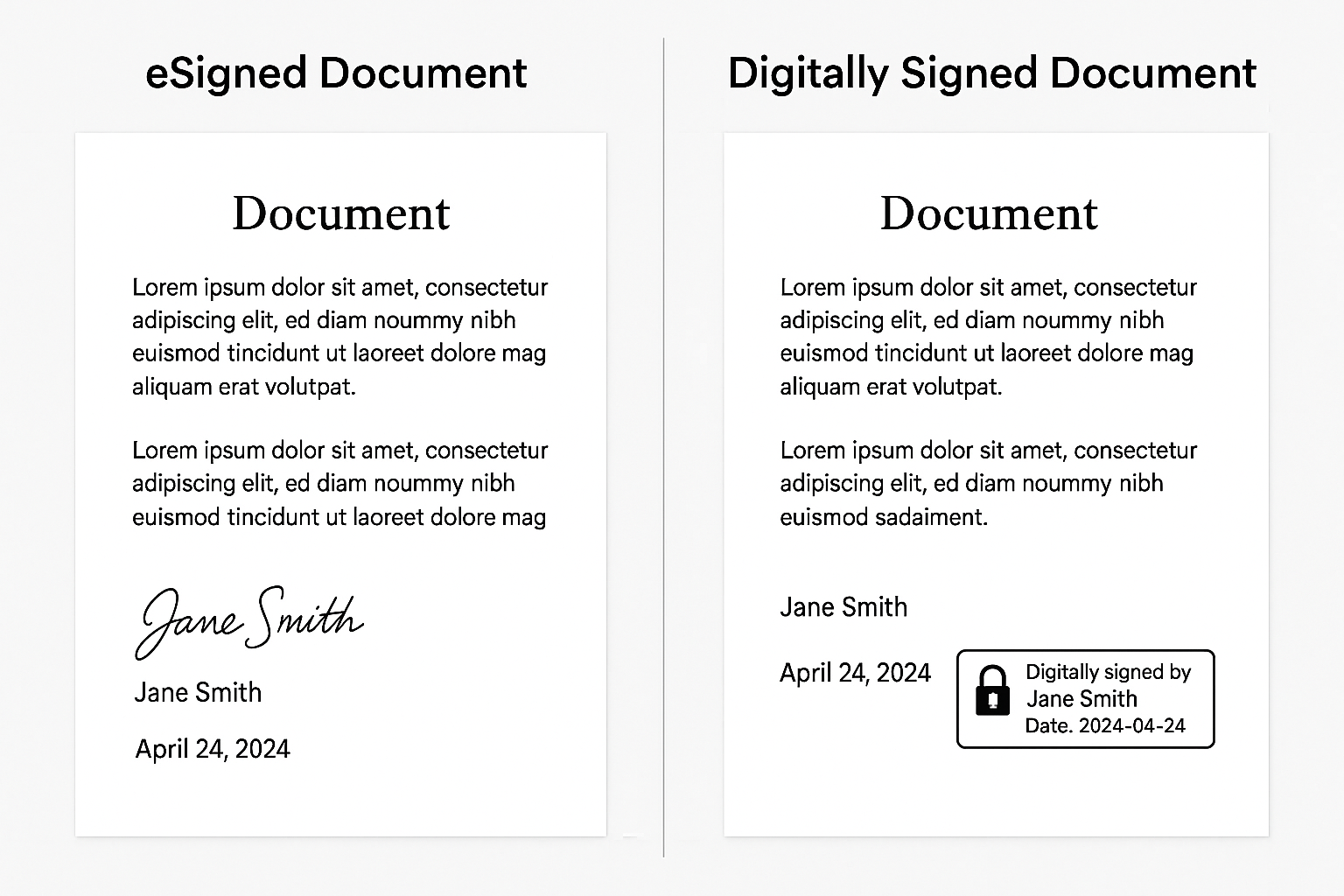
Definitions
eSignature
An e-signature or electronic signature is defined as a signature in electronic form. In simple words, we can say that, when a signatory signs a document through electronic form and not with wet ink, it is known as an electronic signature. It is basically a process that utilises computers to authenticate the signatory, and ensure the integrity of the paper.
However, in the case of electronic signatures, the validation is not functioned by any authorities, which means it is generally not authorised.
Digital Signature
A digital signature is a type of electronic signature that is encrypted and gives the assurance of a signer’s identity. The digital signature is usually authorised because verification of a digital signature is conducted by trusted authorities. The best part about a digital signature is that it is more secure as compared to an electronic signature.
Key Differences
|
Electronic Signature |
Digital Signature |
|---|---|
|
An electronic signature is utilised for verifying a document. |
A digital signature is used for securing a document. |
|
In the case of electronic signature, the verification of electronic signature is not functioned by any trusted authorities. |
In the case of digital signature, the verification of digital signature is performed by authorities or trusted service providers. |
|
It is less secure as compared to the digital signature. |
It is more secure than electronic signatures. |
|
This type of signature is generally not authorised. |
This type of signature is guaranteed authorised. |
|
We cannot validate this type of signature. |
We can easily validate the digital signature. |
|
In electronic signature, the involvement of security features is minimal. |
In digital signature, the involvement of security features is good. |
|
Common types of electronic signature are verbal, electronic ticks or scanned signatures. |
Digital signatures are commonly based on Adobe and Microsoft. |
|
It does not integrate any standards and coding. |
Digital signature includes encryption standards. |
When to Use Which
|
Use Case |
Recommended Signature Type |
|---|---|
|
Non-sensitive business agreements |
eSignature |
|
Employment contracts |
eSignature |
|
Financial documents |
Digital Signature |
|
Legal documents requiring high compliance |
Digital Signature |
|
Internal approvals |
eSignature |